You open a bottle of olive oil, bring it to your nose, and smell something reminiscent of freshly cut grass, leaves, or fresh herbs. In another olive oil, the impression might be sweeter and more delicate, recalling ripe fruits.
These sensations are not just a matter of preference. They are part of the sensory profile of olive oil and help tell the story of the olives, the harvest time, and the characteristics of each variety.
Among the terms used to describe these profiles are green fruitiness and ripe fruitiness. But what exactly do they mean?
First and foremost: what does “fruity” mean in olive oil?
When we say an olive oil is fruity, it doesn’t necessarily mean it tastes like a specific fruit.
Fruitiness is one of the positive attributes used in the sensory analysis of virgin olive oils and corresponds to the set of aromatic sensations derived from healthy and fresh olives.
The International Olive Council (IOC), a global reference in defining olive oil standards, specifically distinguishes between green fruitiness and ripe fruitiness profiles.
This is why, when tasting different extra virgin olive oils, we can encounter quite distinct experiences — even when all are products of excellent quality.
What is a green fruity olive oil?
Green fruitiness is associated with aromatic sensations characteristic of olives harvested while still green or in early stages of ripening.
In practice, it may evoke aromas such as:
- freshly cut grass;
- green leaves;
- fresh herbs;
- green tomato;
- artichoke;
- green almonds;
- or other fresh vegetable references.
Not all these aromas will be present in the same olive oil. The olive variety, terroir, climate, harvest time, and extraction process contribute to forming a unique sensory identity.
Olive oils with a green profile may also exhibit more noticeable bitterness and pungency. These two characteristics, when balanced and pleasant, are positive attributes of virgin olive oil — and not signs of defect.
And what about ripe fruitiness?
In ripe fruitiness, the aromatic sensations are more reminiscent of fruits in a mature stage.
References that may appear include:
- ripe banana;
- ripe apple;
- sweeter fruits;
- dried fruits;
- floral or soft notes.
Generally, these olive oils can convey a more delicate and rounded sensation in the mouth, with less pronounced bitterness and pungency — although the result always depends on the variety and production conditions.
Does ripe fruitiness mean old olive oil?
No. And this is an important distinction.
“Ripe” describes the profile related to the olives’ maturation stage and the sensations perceived in the olive oil. It does not mean the product is aged, oxidized, or past its prime.
A ripe fruity olive oil can be fresh and of high quality.
Similarly, a green fruity olive oil is not automatically superior. They are different sensory expressions.
How to perceive the difference at home?
You don’t need to be a professional taster to start recognizing these characteristics.
Pour a small amount of olive oil into a glass. Hold it between your hands for a few moments to warm it slightly and release the aromas. Then, bring the glass to your nose and inhale slowly.
Instead of immediately trying to guess a specific aroma, first ask a simpler question:
Does this remind me of something greener and fresher, or something riper and sweeter?
Next, taste a small amount. Notice the aroma, the flavor, the bitterness, and that possible sensation of pungency that appears mainly at the back of the throat.
With time — and especially by comparing olive oils side-by-side — these differences become much easier to recognize.
The sensory profile also helps with choices at the table
Knowing these characteristics isn’t just for technical tasting. They can also help you choose the right olive oil for a dish.
An olive oil with a green, more intense profile can create an interesting contrast with roasted vegetables, meats, breads, cheeses, pastas, and dishes with strong flavors.
Meanwhile, more delicate or ripe profiles can beautifully complement preparations where you want to preserve more subtle flavors.
But there are no mandatory pairings. The best harmonization also depends on the taste of those at the table.
To better understand how intensity, fruitiness, bitterness, and pungency can interact with different preparations, also read: How to Choose the Right Olive Oil Profile for Each Dish.
From the Olive to the Aroma in Your Glass
The most interesting thing is to realize that what we smell when opening a bottle began much earlier.
The variety of olive trees, the soil, the climate, the ripeness of the fruits, the harvest time, and the care during extraction all influence the final expression of the olive oil.
It is this combination that makes two extra virgin olive oils offer completely different experiences.
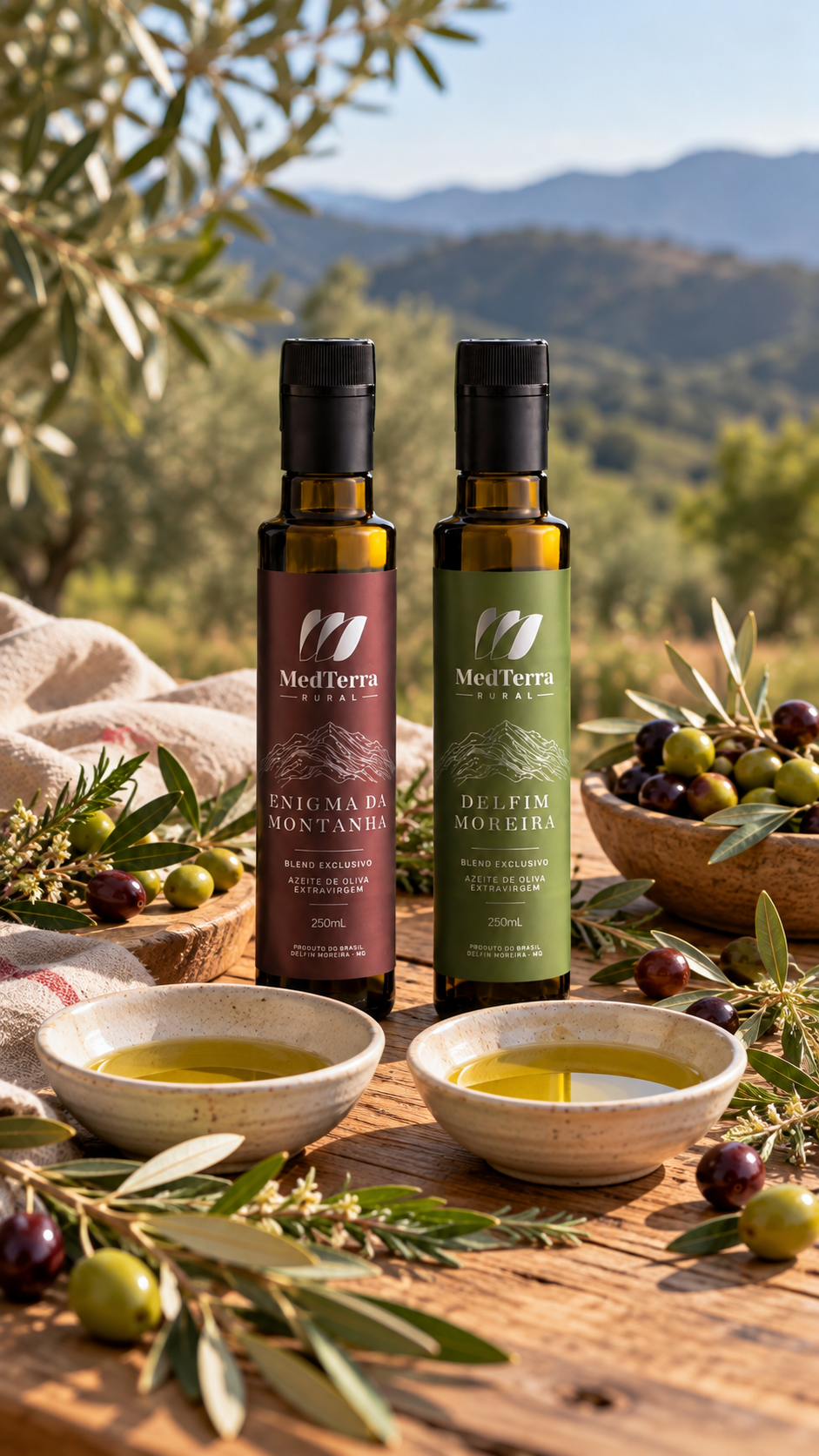
At MedTerra Rural, this diversity can be perceived in the different profiles of olive oils produced in Mantiqueira. The Enigma da Montanha 2026, for example, is made from a blend of Arbequina, Arbosana, Koroneiki, and Grappolo varieties and is part of the TOP 10 Paris 2026 of the Olio Nuovo Days – Quality Competition Southern Hemisphere.
More than simply looking for a “strong” or “mild” olive oil, learning to recognize its sensory profile opens the door to a much more interesting experience.
The next time you taste an olive oil, try starting with the aroma.
Does it remind you of freshly picked leaves and herbs? Or riper fruits and delicate notes?
This first impression can already reveal a lot about the olive oil in front of you.