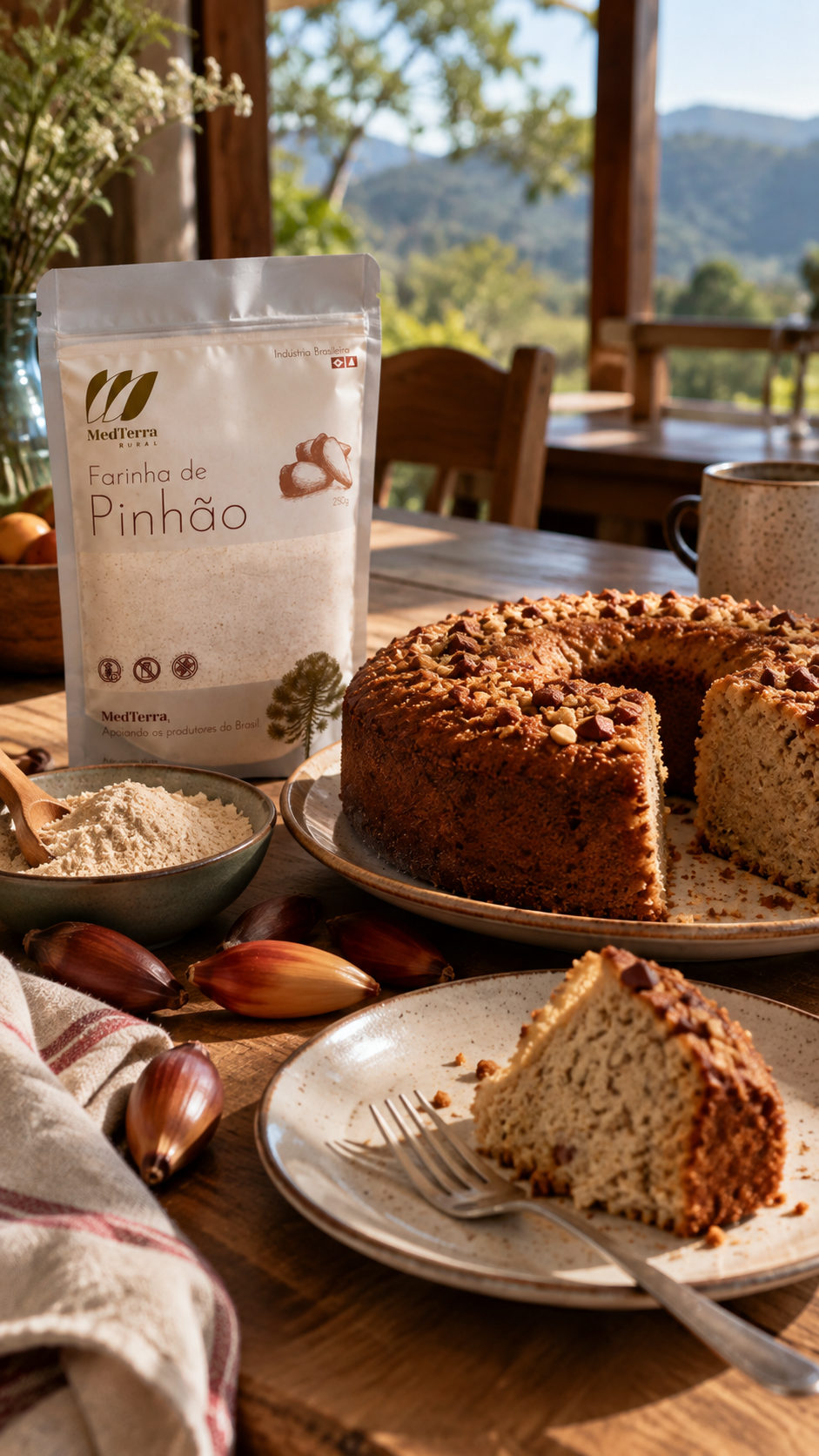
When we think of pine nuts, it is common to first remember the boiled seed or savory preparations typical of regions where araucarias are part of the landscape. However, transformed into flour, this Brazilian ingredient gains new possibilities in the kitchen—including in sweet recipes.
The pine nut flour has a characteristic, mild, and slightly sweet flavor, which allows it to be used in cakes, cookies, pancakes, muffins, pies, and other preparations. The secret lies in choosing ingredients that complement its profile without hiding its personality.
More than simply replacing one flour with another, it is worth understanding which flavors pair well with pine nuts and how to take advantage of their characteristics to create balanced and interesting recipes.
What does pine nut flour taste like?
Pine nut flour is produced from the seed of the araucaria and carries the characteristics of the raw material itself. Its flavor is delicate, slightly sweet, and with notes that may resemble chestnuts and other starchy foods.
This makes it work especially well alongside fruits, cocoa, honey, spices, and nuts. In addition to the flavor, it also affects the texture of the preparations, as it has a different composition than wheat flour.
For those who wish to get to know the ingredient better before using it in recipes, Diário MedTerra has already explained the benefits, characteristics, and different ways to consume pine nut flour.
Banana: a combination that works naturally
Banana is a great partner for pine nut flour. Its natural sweetness and moisture help create soft preparations, while the flavor of the flour adds a different layer to the result.
This combination can appear in cakes, muffins, and pancakes. Cinnamon, vanilla, or a small amount of nutmeg can complete the set, especially when used in balance.
Riper bananas also have a naturally sweeter flavor and a more pronounced aroma, interesting characteristics for preparations where one wishes to enhance the fruit without relying solely on the addition of sugar.
Apple and pear: fruits that gain even more aroma in the oven
Apple and pear are two other fruits that pair well with the profile of pine nut flour. When baked, they develop aromas and flavors that match ingredients with a more earthy and delicate profile.
A batter with pine nut flour, apple, and cinnamon, for example, can serve as a base for cakes and muffins. Pear can appear in pies and cakes accompanied by vanilla, cardamom, or ginger.
In this type of preparation, less can be more. The excessive use of very strong spices can end up hiding the very flavor of the pine nut that one intends to highlight.
Chocolate and cocoa create contrast
Chocolate and cocoa offer another path. While pine nut flour has a milder flavor, cocoa brings intensity and a characteristic bitterness. The contrast can work in brownies, cookies, cakes, and other batters.
Chopped nuts or chocolate chips can also add different textures to the recipe. Thus, the same preparation combines the softness of the batter, the flavor of the pine nut, and crunchier or more intense elements.
The important thing is to observe the quantity of each ingredient. If the chocolate completely dominates the recipe, for example, the subtler flavor of the pine nut flour tends to fade into the background.
Honey: sweetness and aroma in the same combination
Honey can also pair very well with sweet recipes prepared with pine nut flour. Unlike an ingredient used only for sweetening, honey has its own aromas, which vary according to its floral origin and other natural characteristics.
In cakes, cookies, and pancakes, it can contribute to building a more complex aromatic profile and pairs especially well with banana, apple, nuts, and spices.
It is worth remembering, however, that replacing sugar with honey does not simply mean swapping one ingredient for the other in the same amount. Since honey also adds moisture to the preparation, the recipe may require adjustments to the other liquids to maintain the desired texture.
Nuts and other oilseeds
Walnuts, Brazil nuts, cashews, and almonds are good options to accompany pine nut flour. In addition to their characteristic flavors, they add crunch and create contrast with softer batters.
This combination can work particularly well in cookies, cakes, and muffins. The nuts can appear chopped in the batter or used as a topping, depending on the recipe.
As the pine nut itself has a strong identity linked to the araucarias and the Brazilian mountain regions, these combinations also allow for the creation of recipes that value ingredients of origin and expand the repertoire beyond conventional flours.
Coffee can complete the experience
Coffee and preparations with pine nut flour can also form a good duo. This does not necessarily mean adding coffee to the batter. A banana and pine nut flour cake, for example, can simply be served accompanied by a cup of specialty coffee.
In more elaborate desserts, coffee can also appear in creams, syrups, or batters, especially when the recipe includes chocolate or cocoa. Its roasted aromas help create a more intense composition.
Is it possible to replace all the wheat flour?
This is an important question when starting to cook with pine nut flour. Although it can be part of many preparations, its behavior is different from wheat.
Wheat flour has proteins that form the gluten network, the structure responsible for important characteristics of elasticity and support in certain batters. Pine nut flour does not form this same structure.
Therefore, fully replacing wheat flour in a recipe originally developed with wheat can significantly modify the result. In some preparations, using pine nut flour in conjunction with other flours may be a more suitable alternative.
This subject is explained in more detail in the article Pine nut flour vs. wheat flour: what are the differences?.
Which sweet recipes can use pine nut flour?
There are different ways to explore the ingredient in the kitchen. Among the possibilities are:
- banana, apple, or spice cakes;
- cookies with chocolate or nuts;
- sweet pancakes;
- muffins;
- fruit crumble;
- biscuits;
- pie crusts;
- cakes prepared with honey;
- recipes with cocoa and chocolate.
More important than establishing a single proportion is understanding the function of each ingredient and making adjustments according to the preparation. Pine nut flour does not need to be seen only as a substitute for another flour: it can be included in the recipe precisely to add its own characteristics.
An ingredient from Mantiqueira that invites experimentation
Transforming pine nuts into flour expands the possibilities for using an ingredient deeply associated with araucaria landscapes and the food culture of the South and Southeast regions of Brazil.
In sweet cooking, pine nut flour gains space when its flavor is treated as part of the recipe, and not simply as an alternative to another ingredient.
Banana, apple, pear, chocolate, cocoa, honey, nuts, coffee, and spices are some of the possible paths. From them, it is possible to experiment with proportions, aromas, and textures and discover new ways to bring to the table a Brazilian ingredient linked to the land, tradition, and diversity of flavors.